What Makes a Good Latte at Toasted
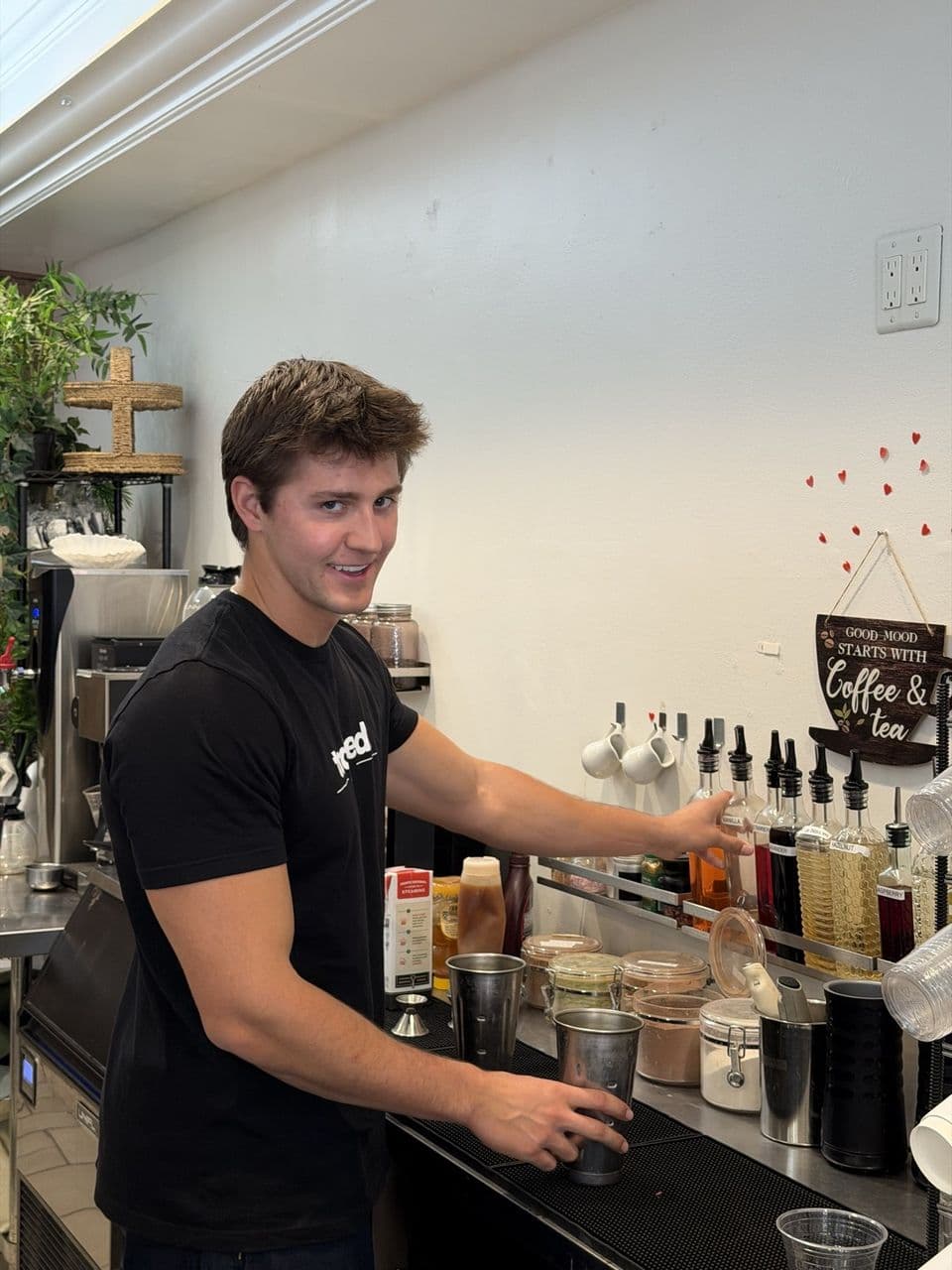
The latte is our bestseller. People order them by the dozen and rarely think about what's in the cup beyond "coffee with milk and syrup." That's fine — that's the right level of detail for someone who just wants their morning drink to be good.
But the way we build them isn't accidental, and a few of you have asked. So this is the inside-the-bar version: three variables, calibrated.
Variable 1: The Espresso
We pull Stumptown Hairbender as a double shot — about 36g of liquid out of 18g of dry coffee, in roughly 28 seconds. That's the standard ratio, but the timing window is what matters. Pull too fast and the shot is sour and thin. Pull too slow and it's bitter and the milk drowns it.
Hairbender holds a chocolate-and-citrus character that survives the milk pour, which is the whole point of using a quality bean for milk drinks. Cheaper espresso disappears under steamed milk; Hairbender stays present.
Variable 2: The Milk
Whole milk is the default. Whole steams better than 2% — it has enough fat to develop a glossy, paint-like microfoam without splitting. We steam to about 140–150°F. Hotter than that and the milk burns and turns sweet-then-flat. Cooler and it tastes like warm milk.
The texture target is what baristas call microfoam — millions of tiny bubbles that look uniform, almost like wet paint. You should be able to pour latte art with it. If you can't see the bubbles, you nailed it.
Oat milk: we use a barista-grade oat milk that froths comparably to whole. No upcharge. Almond steams thinner — the foam doesn't hold as long, but it's still good. Both are available for any drink at no extra cost.
Variable 3: The Syrup
This is the part where most cafés cut corners. The standard move is to install commercial syrup pumps and call it a day. The flavor is fine. It's also indistinguishable from every other café using the same product.
We make our syrups in-house. Vanilla is real vanilla bean. Lavender is steeped from dried buds. Rosewater is the same rosewater we use in the Saffron & Rose Toast Tower. The orange blossom is from a Glendale-grown citrus blend. There are eleven flavors total: vanilla, mocha, white mocha, rosewater, orange blossom, lavender, peppermint, hazelnut, coconut, raspberry, and SF (San Francisco) vanilla.
The result: a vanilla latte at Toasted tastes like vanilla. A lavender latte tastes like lavender, not like a candle. The difference is largest with the floral and herbal flavors — those are where commercial syrups read most artificially.
How They Get Combined
The order matters more than people think:
- Syrup goes in the cup first. A 12 oz latte gets ~½ oz of syrup — adjustable up or down on request.
- Espresso pulled directly into the cup. The hot espresso dissolves the syrup evenly before any milk is added. If you add syrup last, it pools at the bottom and the first sip tastes like espresso, the last like syrup.
- Steamed milk poured in a continuous stream, with a wrist-roll at the end to land latte art. The art is decorative but it's also a quality signal — you can't pour it without the milk being correct.
What to Order If You Want to Compare
- Vanilla latte ($6.25) — the classic. Real vanilla bean syrup. Best baseline.
- Rosewater latte ($6.25) — our signature. Floral, light, distinctive. If you've never had a rose-flavored coffee drink, this is the place to start.
- Cortado ($6.25) — a Hairbender double cut with 4 oz of steamed milk, 6 oz in the glass. No syrup unless you ask. The cleanest expression of the Stumptown beans on our bar.
- Coffee Flight ($17) — if you want to taste four different drinks side-by-side. Includes a vanilla latte and a mocha so you can taste the syrup difference.
Or just come in and order whatever you usually order. The work behind the cup is the work behind every cup. We just thought you might want to know what's in there.
Written by the Toasted team
Come visit
Toast Towers — built at the bar, for the table. Coffee, brunch, and a patio that welcomes your dog.
2420 Honolulu Ave, Montrose, CA 91020